Zhangazy Moldamuratov
https://orcid.org/0000-0002-4573-1179
PhD, Associate Professor, Research Professor, School of Construction
zh.moldamuratov@kazgasa.kz
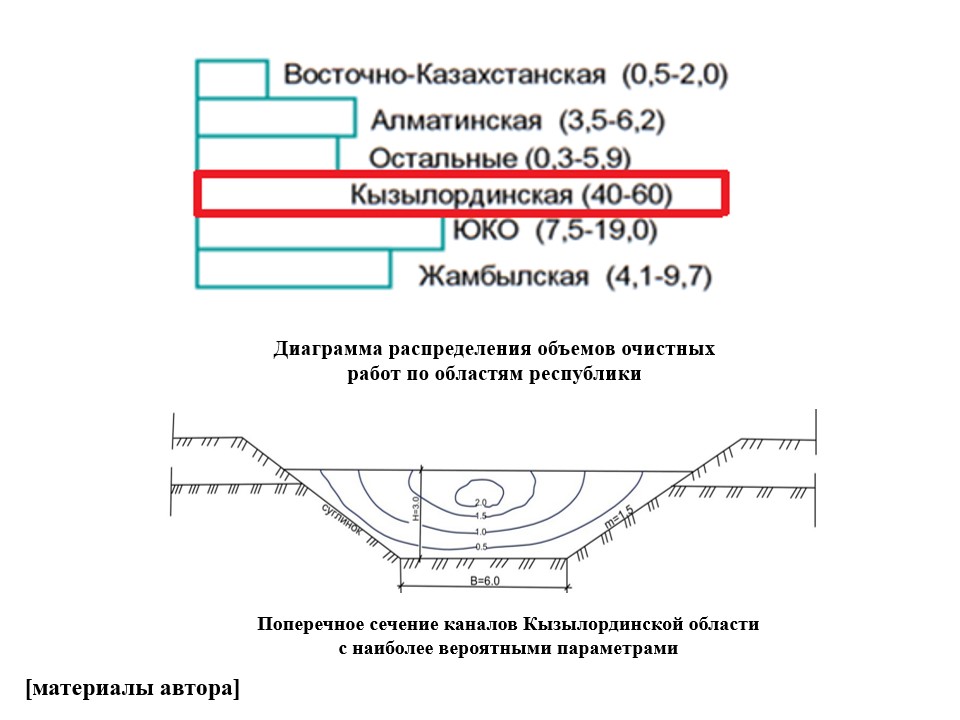
An analysis of the state of operation of hydro-reclamation systems in the arid zone of the country over the past 15–20 years has revealed a number of circumstances and factors that have led to negative phenomena in this field and its stagnation. Sustainable water use is achieved through the optimal satisfaction of the needs of economic sectors and the population for water. The effective justification of the use of water resources in river basins is based on system-wide ecological and economic criteria. Solving this complex task is associated with multifaceted risks: natural and anthropogenic factors, continuous and unreasonable growth in water consumption, and pollution of water sources.
A statistical survey of existing hydro-reclamation systems showed that the length of inter-farm and intra-farm canals with a discharge of 10 m³/s to 20 m³/s constitutes 98.5% of the total canal length, while the length of canals with earthen beds accounts for 84.9%, with 65.5% of the total cost of hydro-reclamation system construction being allocated to canal work. For most hydro-reclamation systems in Kazakhstan, water intake is carried out from mountain and foothill rivers that transport a significant amount of sediment, leading to channel deformations and reduced canal throughput capacity. Over the past 20 years, many hydraulic structures have lost their design reliability and pose a real ecological and social threat.
Restoring the hydro-reclamation component of the agro-industrial complex of the Republic of Kazakhstan is directly related to the need for reconstruction, modernization, and construction of hydraulic structures – the main element of the irrigation network.
The aim of the project is the scientific justification and development of effective comprehensive technological solutions for the cleaning, reconstruction, and modernization of hydro-reclamation system canals.
Project objectives:
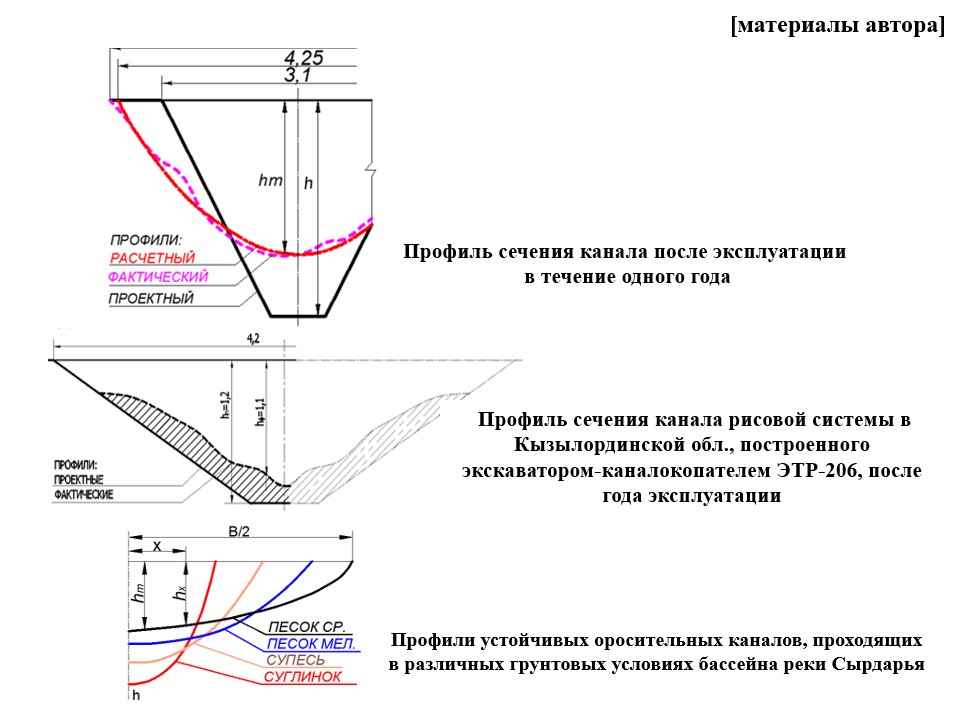
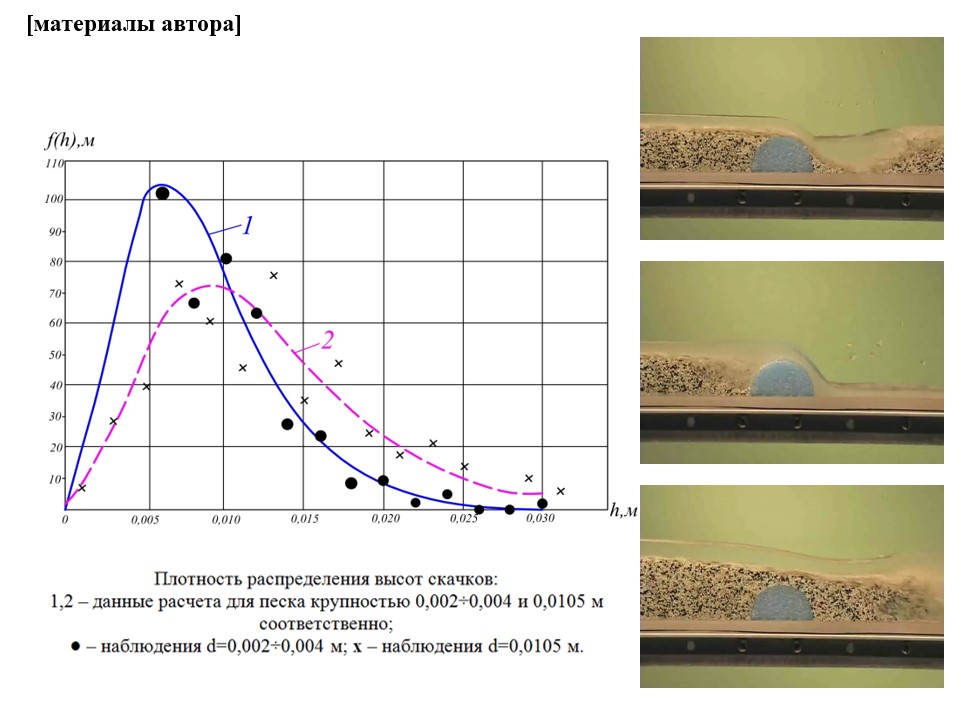
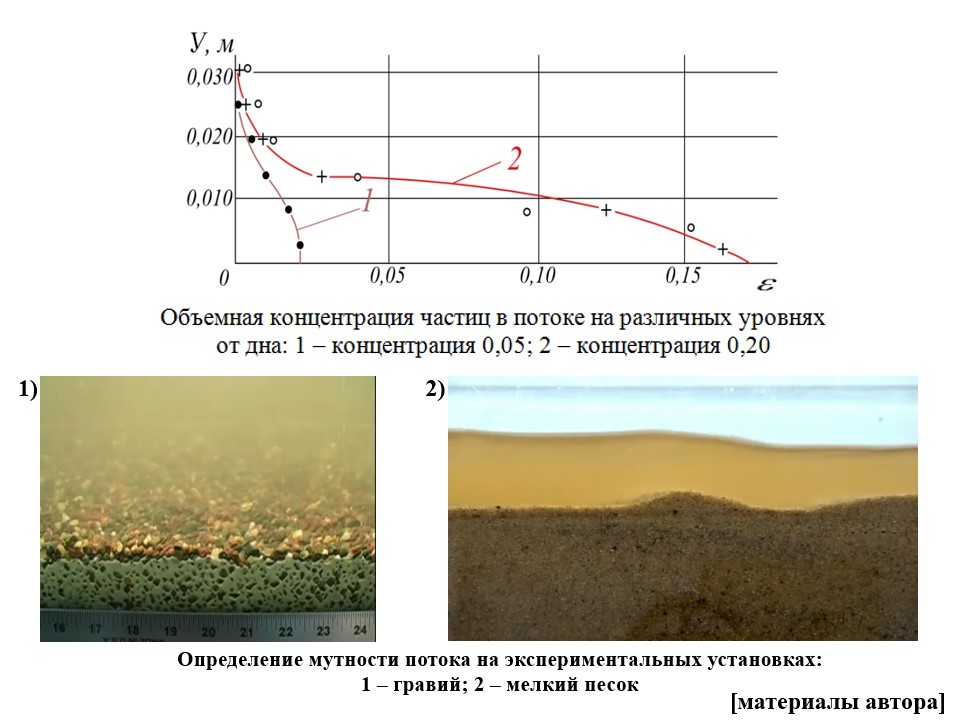
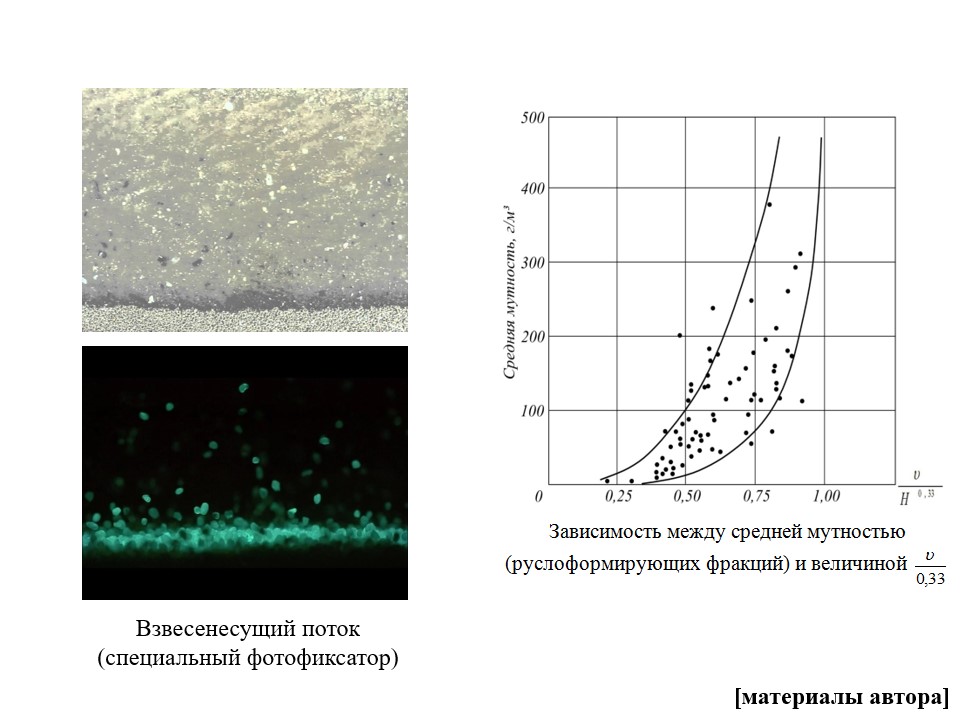
Study of the influence of operational factors on the sediment transport capacity of earthen canal beds.
Systematization of structural features and statistical parameters of irrigation canals in southern Kazakhstan and their impact on the selection of machinery and equipment.
Study of the slope stability of parabolic-profile irrigation canals.
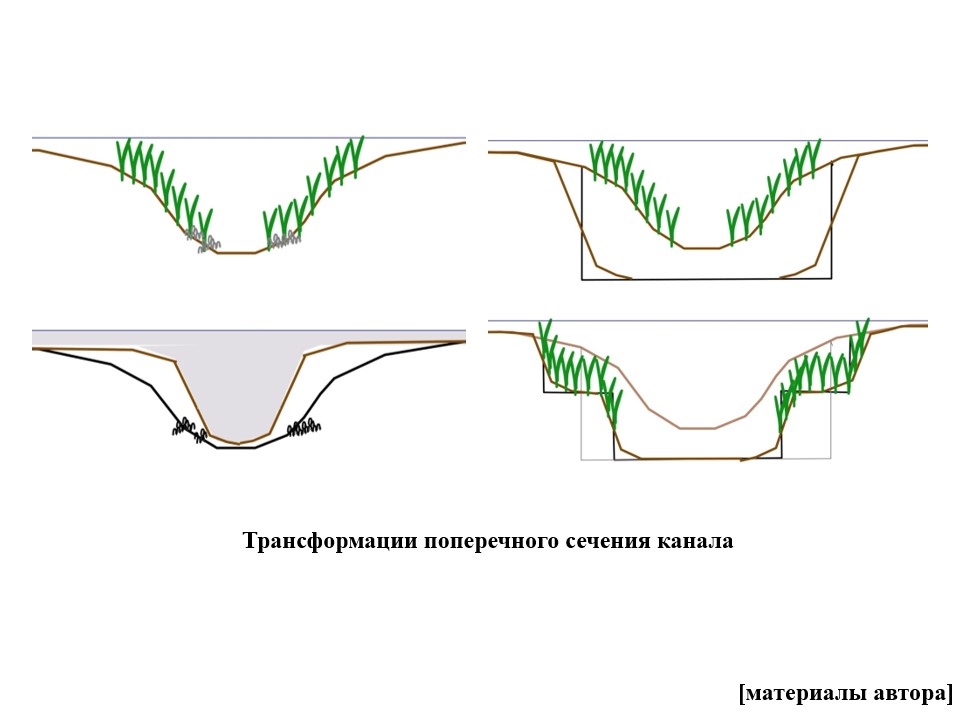
Development of methodological approaches for forming the most efficient canal cross-section profile.
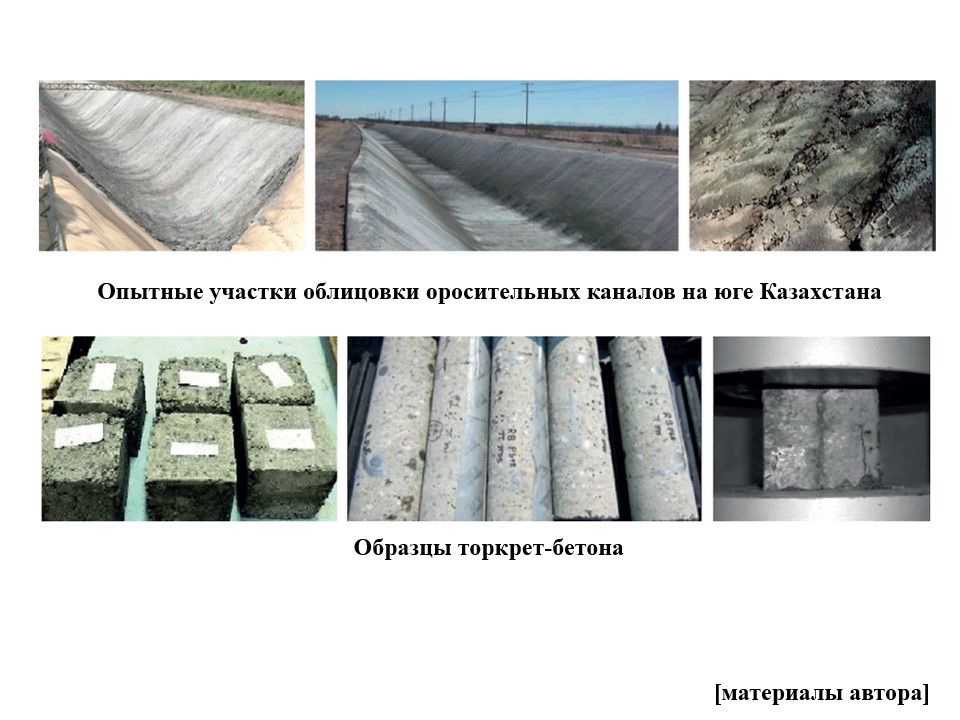
Development of structural and technological solutions to ensure the operational reliability of hydro-reclamation system canals.
Expected project outcomes:
Optimal measures will be developed and proposed to ensure the design performance of irrigation canal operations.
Criteria for the effective operation of canals with enhanced sediment transport capacity will be determined.
Key parameters and indicators for the most efficient canal cross-section will be formulated.
Engineering and technical recommendations for improving the operational characteristics of existing hydro-reclamation system canals will be developed.
At least two articles will be published in journals from the top three quartiles by impact factor in the Web of Science database or with a percentile of at least 50 by Cite Score in the Scopus database.
At least four articles or reviews will be published in peer-reviewed foreign or domestic journals recommended by the Committee for Quality Assurance in the Field of Education and Science of the Ministry of Education and Science of the Republic of Kazakhstan.
Two utility model patents will be obtained.
One monograph and one textbook will be prepared and published.
Articles
COMPARATIVE ANALYSIS OF THE EFFICIENCY OF PARABOLIC AND TRAPEZOIDAL SECTIONS IN IRRIGATION CANALS
CROSS-SECTION CHANNELS OF HYDRAULICALLY AND STATICALLY STABLE SHAPE
Experimental study of asphalt concrete as the optimal material for lining irrigation canals
EXPERIMENTAL STUDY OF THE EFFECT OF SURFACTANTS AND WATER-CEMENT RATIO ON ABRASION RESISTANCE OF HYDRAULIC CONCRETES
Irrigation channel lining using shotcrete with additives
Polymer concrete production technology with improved characteristics based on furfural for use in hydraulic engineering construction
SELECTION OF THE OPTIMAL MACHINERY COMPLEX FOR CONSTRUCTING IRRIGATION CANALS WITH A PARABOLIC PROFILE
INFLUENCE OF SURFACTANTS ON THE ABRASION RESISTANCE OF HYDRAULIC CONCRETES
FIELD SURVEY OF THE TECHNICAL CONDITION OF LINED INTER-FARM CANALS
Patents
DAMLESS WATER INTAKE WITH A VARIABLE HEIGHT BOTTOM WEIR
MULTI-TRENCH SAND-GRAVEL FILTER WITH BOTTOM WEIR AND SEPARATE WALL
DAM WATER INTAKE WITH BOTTOM GUIDE WEIRS
DEBRIS-FLOW PASSING STRUCTURE WITH A WEIR
 Nailya Bekturganova
PhD in Chemistry, Associate Professor, Professor, Faculty of Construction Technologies and Management
https://orcid.org/0000-0003-3062-3340
n.bekturganova@kazgasa.kz
Development of multifunctional nano- and micromodifiers for the technology of high-performance concretes.
The final expected result: multifunctional micro- and nano-additives for self-leveling concretes; formulations of self-leveling concretes for general construction purposes used in precast and monolithic construction, based on local raw materials, including industrial waste.

Supervisor of the project: Elvira Danibekova
Associate Professor-Researcher at the School of Architecture
https://orcid.org/0000-0003-4421-9875
e.danibekova@kazgasa.kz
Project topic: АР19680138 Regional identity as a factor of the sustainable development of the independent Kazakhstan architecture in the context of globalization
Period of project implementation: 2023-2025
Priority direction: Research in the field of social sciences and humanities. By sub-priority: Fundamental, applied, interdisciplinary research in the field of humanities
Registration Number and Contract Date: Agreement No. 360/23-2Б dated August 03, 2023
Project relevance: The sustainable development of Kazakh architecture, based on regional identity, requires an integrated approach that involves the creative, cultural, technical, and economic resources of the country. In today’s globalized world, national architectural features are being lost, affecting the self-identity of citizens and the international image of Kazakhstan. To address this issue, it is essential to analyze and synthesize the results of scientific research and practical projects undertaken by domestic and international architects in Kazakhstan. This analysis will help identify ways to sustainably develop Kazakh architecture while preserving its regional identity within the natural, climatic, historical, cultural, socio-political, and economic contexts of the country.
Project purpose: is to determine the ways of sustainable development of the architecture of independent Kazakhstan in the context of globalization processes based on the factor of regional identity.
Project objectives:
Research group composition:
Expected results (depends on the project implementation period)
The conducted research will contribute to:
1) application in real practice of design in the form of scientific and methodological recommendations for the development of the material and spatial environment of settlements, taking into account regional identity in the natural and climatic, historical and cultural, socio-political, economic context of modern Kazakhstan. The target consumers of each of the expected results are architects, art historians, architectural heritage restorers, urban planners, designers, builders.
2) the impact of the expected results on the development of the main scientific direction with the introduction into scientific activity, educational programs in the field of “Architecture”.
3) social, economic, environmental impact of the project results through
– the growth of spirituality and social consciousness, the formation of a material contribution to the self-identification of citizens of the country;
– the formation of uniqueness in architecture with the strengthening of international status;
– expansion of tourist interest and attraction of investors to the economy of Kazakhstan.
Obtained results
A list of publications published within the framework of the project, including DOI (links):
– Abdrassilova G.S. “Sustainability of architecture in desert areas: current trends”. QazBSQA Bulletin. 2023, No. 3 (89), pp. 6-21 https://doi.org/10.51488/1680-080X/2023.3-01
– Tuyakayeva A.K., Danibekova E.T., Abdrassilova G.S., Onishchenko Yu.V. ” Regional features of the architecture of residential buildings in the 1930s-1990s of Karaganda city” KAZGAS Bulletin, No. 4(90), 2023, pp. 62-76 https://doi.org/10.51488/1680-080X/2023.4-05
– Abdrassilova G.S., Danibekova A.T., Tuyakayeva A.K., Syzdykova A.S. “Architecture of Almaty in the 20th century: in search of cultural identity” Bulletin of Kazakhstan, 2024, No. 4 (94), pp. 8-23 https://doi.org/10.51488/1680-080X/2024.4-01
brief information about the events held (conferences, seminars, etc.), if available:
The interim results of the research project were discussed at a scientific seminar held at the Faculty of Architecture of International educational corporation (KazGASA) on June 13, 2024. The topic of the seminar was “Factors of formation of regional features of architecture in the conditions of independent Kazakhstan”. Speakers included the project’s Head and researchers: E. Danibekova, G. Abdrassilova, L. Rakhimzhan, and G. Kamalova.
SA Instagram page: https://www.instagram.com/reel/C8YgN5FopSv/?igsh=bGViZ2ZwZmNxbWRw
Link to the IEC website: https://iec.edu.kz/2024/06/19/Научный-семинар-Факторы-формирован/
– scientific and practical seminar “Monitoring the condition of monuments of material culture of Kazakhstan, including the influence of natural and climatic conditions” within the framework of the assignment of the Committee of Culture of the Ministry of Culture and Information and the IRN AR Project 19680138. 2-3.05.2024
– Made presentations on interim results at international conferences (Baku, 2023; Florence, 2023; Krakow, 2024; Czestochowa, 2024; Florence, 2024).
– The results of the study are included in the educational process:
in the lecture course “Globalization and problems of regional architecture of Kazakhstan” (Educational program 8D07311 – Doctoral studies, fall semester – 2023, spring semester – 2024);
lectures were held for 2nd year students (Educational program 6B07311 – Bachelor’s degree, 02.26.2024, 02.27.2024.), in the framework of Industrial practice 1.
– the results of the research are distributed through publications in domestic and foreign scientific and practical publications, through speeches at national and international conferences, seminars, webinars, forums, round tables and symposiums. The information is posted on the official website of the International Educational Corporation, social networks, the Digest of the Union of Architects of the Republic of Kazakhstan.

Supervisor of the project: Shynar Kultayeva
PhD, Associate Professor at the School of Engineering
https://orcid.org/0000-0002-2409-1184
sh.kultayeva@mok.kz
Project topic: АР19174518 «Study of electrical, thermal, and mechanical properties of porous ceramic based on silicon carbide»
Period of project implementation: 2023-2025
Priority direction: “Geology, extraction and processing of mineral and hydrocarbon raw materials, new materials, technologies, safe products and structures”
Registration Number and Contract Date: 0123РК00640 / 17.05.2023г. Contract No 160 ЖҒ-4Project relevance: Over the past few years, highly contagious viral infections such as COVID-19 and SARS-Cov-2 have caused complex medical problems around the world. Typically, these infectious viruses are spread by airborne droplets, with viral particles ranging from larger respiratory droplets to smaller aerosols. Since some tiny infectious particles can linger in the air and accumulate in closed complexes, a good air purification system is needed. This is especially true in enclosed spaces where a lot of people gather. For example, in the subway and hospitals. Electrically heatable filters are considered as one of the most effective tools to eliminate such viruses and purify contaminated air.
Project purpose: Study of electrical, thermal, and mechanical properties of porous ceramics based on silicon carbide, development of novel methods to tune the electrical and thermal conductivity, porosity, and maximizing the strength of porous silicon carbide ceramics.
Project objectives:
Research group composition:
Expected results:
Obtained results
 Supervisor of the project: Yenlik Ormakhanova
PhD, Associate Professor at the KAU
https://orcid.org/0000-0001-8319-4469
e.ormakhanova@mok.kz
Project topic: АР19175597 Development of “Digital Conversation” Methods in the Media Discourse of Kazakhstan
Period of project implementation: 2023-2025
Priority direction – digital media discourse
Registration Number and Contract Date: 160 ЖҒ4 17 may 2023
Project relevance:
Project purpose: scientific substantiation and development of new methods of “digital conversation” in the media discourse of Kazakhstan.
Project objectives:
Research group composition:
Expected results (depends on the project implementation period)
Or:
Obtained results
Zhangazy Moldamuratov
https://orcid.org/0000-0002-4573-1179
PhD, Associate Professor, Research Professor, School of Construction
zh.moldamuratov@kazgasa.kz
Project topic: IRN АР23487624 “Investigation of Load-Bearing Structural Elements of Hydraulic Structures Using the Engineering Seismometric Method of Inspection and Monitoring”
Period of project implementation: 2024–2026
Priority direction: Energy, Advanced Materials, and Transport
Registration Number and Contract Date: No. 229/GF24-26 dated September 9, 2024
Project relevance: At present, safety issues concerning water management facilities, particularly reservoirs, dams, and other hydraulic structures, are of critical concern in society. This is primarily due to the fact that the failure of such facilities can lead to significant economic, environmental, and social losses. Accordingly, it is essential to minimize the likelihood of such incidents. This issue is also relevant for hydraulic structures in the Republic of Kazakhstan, the majority of which were built during the 1960s–1980s and have already experienced emergency situations. The most significant cases include the failure of earth dams in the villages of Kyzylagash (2010) and Kokpekti (2014).An analysis of hydraulic structure failures both in Kazakhstan and abroad shows that the causes often lie in violations of safety regulations and standards during the design, construction, and operational phases, an ineffective system for monitoring technical condition, and a shortage of qualified specialists.Systematic monitoring of hydraulic structures based on detailed inspection allows for timely detection of defective zones and structural elements, thereby enabling preventive measures to avoid accidents. This requires improving control methods using innovative scientific developments and modern measurement technologies.
Project purpose: To improve the effectiveness of methods for inspecting and monitoring hydraulic structures using an engineering seismometric approach in order to ensure their structural stability and operational safety in a changing environment.
Project objectives:
Research group composition:
Expected results (depends on the project implementation period)
Results
Zh.N. Moldamuratov, A.A. Bryantsev, G.T. Kareken, N.A. Shanshabayev, A.Z. Tukhtamisheva, O.D. Seitkazinov. МНОГОФАКТОРНОЕ ОБСЛЕДОВАНИЕ ГИДРОТЕХНИЧЕСКИХ СООРУЖЕНИЙ В СЕЙСМИЧЕСКИ АКТИВНЫХ ЗОНАХ: НА ПРИМЕРЕ ТАСОТКЕЛЬСКОГО ВОДОХРАНИЛИЩА, РЕСПУБЛИКА КАЗАХСТАН // Вестник Казахской головной архитектурно-строительной академии, Science journal. KazGASA, 2 №96, Almaty, 2025 – p. 150-169.

Supervisor of the project: Rysbubi Abuova
PhD, Assistant Professor at the School of Engineering
https://orcid.org/0000-0001-8208-7987
r.abuova@mok.kz
Project topic: AP27511849 Development of alloyed steels with dissipative properties and their surface modification by deposition of nanostructured wear-resistant coatings for critical parts in mechanical engineering.
Period of project implementation: 2025–2027
Priority direction Energy, advanced materials, and transport.
Registration Number and Contract Date No. 181KMU-25-27 dated 13.06.2025
Project relevance: One of the main problems in Kazakhstan is the low localization of high-quality steel production, limited capacity for applying nanostructured coatings, and an insufficient level of scientific and technical potential. Only 30% of the demand for high-strength materials is covered by local manufacturers, while 70% is imported, leading to economic losses. In 2022, Kazakhstan’s steel imports amounted to 1.2 million tons worth over 1.3 billion USD, while domestic production of high-quality alloyed steels did not exceed 200 thousand tons. Moreover, the share of products with nanostructured coatings in Kazakhstan is less than 5%, which is significantly lower than in countries with advanced industrial technologies, where this figure reaches 25–30%. Annually, only 15–20 patents in the field of nanomaterials and coatings are registered in Kazakhstan, while in Germany this figure exceeds 300.
Project purpose: To research and develop new structural steels with ceramic-metal nanostructured coatings that possess damping properties, increased hardness, adhesion, high fracture toughness, and low macro stress levels.
Project objectives:
Research group composition:
 Supervisor of the project: Ainur Tukhtamisheva
PhD, Associate Professor at the School of Engineering
https://orcid.org/0000-0001-8945-3783
a.tukhtamisheva@mok.kz
Project topic: АР25793529 «Research and development of energy efficient wall assemblies to increase thermal insulation and reduce heat transfer in buildings».
Period of project implementation: 2025-2027 y.
Priority direction: Energy, advanced materials, and transportation.
Registration Number and Contract Date –
Project relevance: The project focuses on creating energy-efficient wall units with improved thermal insulation characteristics, which will significantly reduce heat transfer in buildings in Kazakhstan and reduce energy costs for heating and cooling. It is expected to achieve a reduction in heat loss by 20-30%, which will lead to energy savings of 10-15% due to the introduction of modern innovative materials such as composites and vacuum insulation. Within the framework of the project, 3-5 experimental models of wall assemblies will be developed and 10-15 laboratory tests will be conducted to assess their thermal conductivity and adaptation to the climatic conditions of the country. It is also planned to simulate energy consumption for 5-7 different types of buildings in order to evaluate the effectiveness of the proposed solutions. The project involves not only improving the environmental sustainability of buildings, but also improving the comfort of living in accordance with international standards. Recommendations will be prepared for the introduction of energy-efficient technologies in mass construction, which will improve building codes and standards. The implementation of the project will increase the competitiveness of Kazakhstan’s construction industry, ensure the growth of exports of construction services and materials, and contribute to achieving national sustainable development goals, including reducing the carbon footprint and increasing the share of renewable energy sources.
Project purpose: The research and development of energy-efficient wall joints will reduce heat loss and energy consumption in buildings, thereby contributing to the improvement of energy efficiency in construction and supporting Kazakhstan’s environmental goals of reducing its carbon footprint.
Project objectives:
Research group composition:
Expected results (depends on the project implementation period)
 Supervisor of the project: Aliya Umirbayeva
PhD, Associate Professor at the School of Engineering
ORCID 0000-0002-4746-3411
a.umirbaeva@mok.kz
Project topic: АР25795283 «Development of Web-GIS for monitoring surface waters during spring floods using Earth remote sensing and GIS technologies»
Period of project implementation: 2025-2027
Priority direction: Ecology, environment and rational environmental management.
Registration Number and Contract Date –
Project relevance: In 2024, Kazakhstan experienced the largest flood in the last 80 years, and an emergency regime was introduced in 10 districts of 17 regions. A sharp rise in the water level in the Zhaiyk River affected the cities of Oral and Atyrau, as well as neighboring areas of the regions, which necessitated a comprehensive geoecological assessment of water resources using remote sensing methods and GAGE technologies. In this regard, it is planned to develop a special information and analytical system for collecting, processing, analyzing, evaluating and visualizing data on the water resources of Atyrau region. This system will be based on Earth remote sensing and GIS technologies, which will allow efficient use of the data obtained and provide mass access to cartographic products through the geoportal.
Project purpose: The main objective of the project is to assess and monitor surface waters during the spring floods of Atyrau region by developing an information and analytical system – Web–GIS.
Project objectives:
Research group composition:
Expected results
1) Publications in foreign peer-reviewed scientific journals
Based on the results of research work, it is planned to:
– at least 2 (two) articles will be published in journals from the first three quartiles of the impact factor in the Web of Science database or having a CiteScore percentile in the Scopus database of at least 50.
2)- scientific and methodological instructions for processing and analyzing collected data will be developed;
3) will be developed: algorithm for conducting space monitoring of water resources using GIS technologies; scientific and methodological instructions for processing and analyzing the collected data; a web geographic information system. Developed interactive system will allow creating a centralized database, coordinating work of local organizations dealing with water resources. Implementation of development will solve problems of timely delivery of obtained data to users through web GIS and GIS web application.
4) long-term spatial and temporal changes in surface waters in the Atyrau region will be identified using multispectral satellite measurements (analysis of various indices) with assessment of their dynamics;
5) up-to-date digital map of river system of study area will be created;
6) assessment of state of surface waters during spring floods will be carried out using monitoring data;
7) geodatabase will be created and methods for assessing state of surface waters during spring floods will be defined, taking into account methods of geoinformation mapping, earthr remote sensing, hydraulic modeling, taking into account scenarios of high-water and low-water years.
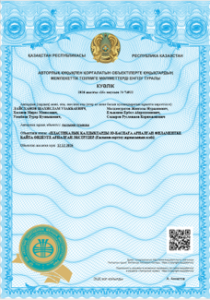
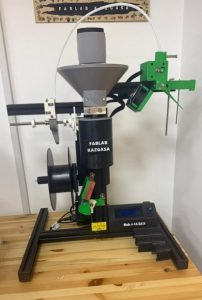
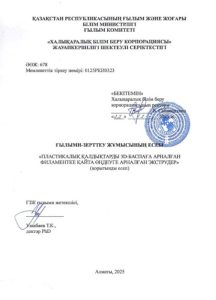
This startup project is aimed at developing a technology for recycling plastic waste, specifically PET bottles, into filament for 3D printers. As part of the project, a small-scale automated extruder prototype was designed and assembled to melt plastic and produce a uniform filament thread. Experimental results have proven that the recycled filament is fully suitable for educational, prototyping, and household 3D printing tasks. Implementing this proposed technology in educational institutions’ STEM laboratories and small production workshops will significantly contribute to reducing plastic waste volumes, decreasing the consumption of primary polymers, and promoting the development of a circular economy.